
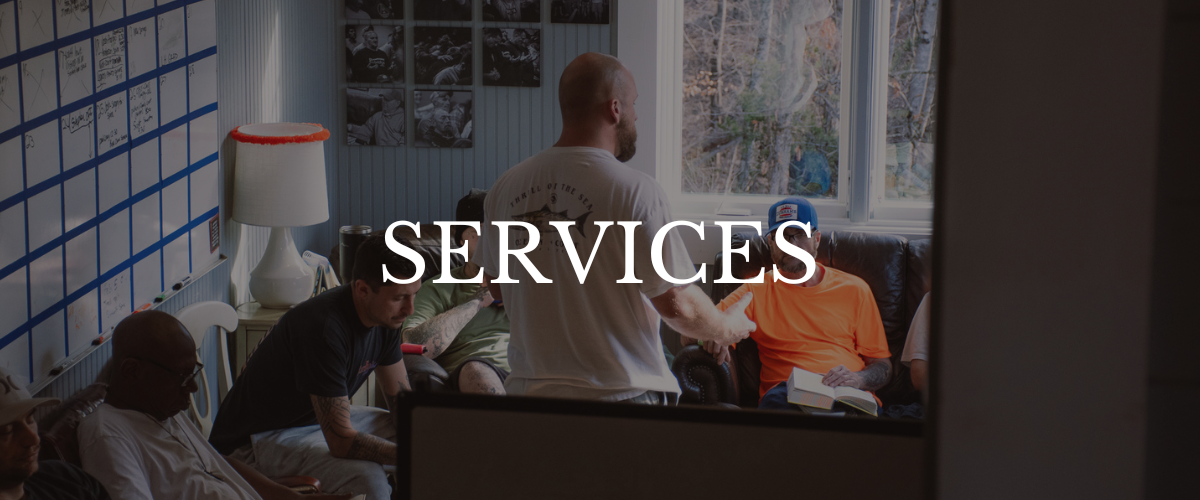
At the Legacy Home, our services are designed to support the whole person—emotionally, spiritually, psychologically, and behaviorally. Every aspect of our program is grounded in evidence-based practices and tailored to each resident’s individual needs, walking alongside them from their first days in the program all the way through their transition to independent living.
Counseling and Support Services
Individual Counseling
Each resident receives a comprehensive intake and clinical assessment to identify the severity of substance use disorder and any co-occurring mental health needs. From there, our counselors use a Biopsychosocial-Spiritual-Experiential approach, addressing the full picture of a person's life — including biological health, thought patterns, relationships, spiritual beliefs, trauma, and living circumstances.
Individual sessions draw from Cognitive Behavioral Therapy (CBT), identity restructuring, grief processing, and ongoing treatment planning to track progress and support growth.
Group Counseling
Facilitated group sessions give residents the opportunity to build interpersonal skills, practice accountability, and develop empathy and connection with others walking a similar path. Groups meet weekly during the first six weeks of the program, and monthly once residents are employed.
Psychoeducation Classes
Residents participate in structured educational classes covering:
Cognitive Behavioral Therapy — understanding how thoughts, feelings, and behaviors are connected
Psychosocial Development — exploring identity, relationships, and personal growth
The Brain and the Body — how addiction affects body systems and brain function
Career Development — resume building, goal setting, and job readiness
recovery & spiritual formation
12-Step Program
Recovery at Legacy Home is grounded in the time-tested principles of the 12-step program. Staff walk alongside each resident through the steps, providing guidance, accountability, and support at every stage of the process. Working the steps isn't just an activity — it's the foundation of the spiritual and personal transformation that makes lasting recovery possible. Residents are also connected with sponsors and the broader recovery community to build relationships that extend well beyond their time with us.
Life Skills Development
Practical, real-world skills are woven throughout the program, including financial literacy and budgeting, time management, communication, overall health and wellness, and the spiritual principles of honesty, humility, service, and accountability.
Peer Support
Residents are connected with peer support specialists — people in recovery themselves who understand the journey firsthand. Through one-on-one mentoring and group connection, peer support builds a culture of trust, shared experience, and hope that extends well beyond the program.
COMMUNITY & REINTEGRATION
Community Engagement
We believe recovery doesn't happen in isolation. Throughout the program, residents are taken into the community to participate in local church services, recovery events and gatherings, and service projects. These experiences help residents rebuild a sense of belonging, practice the principles they're learning, and discover that a full, connected life in sobriety is not only possible — it's within reach.
Employment & Life Stabilization
Returning to stable, productive living is a central goal of the Legacy Home program. Our staff actively help residents secure employment, working through job readiness, applications, and the practical challenges of re-entering the workforce. Beyond employment, we assist residents in navigating the financial, legal, and personal matters that often accompany recovery — including obtaining identification documents, meeting probation or court obligations, addressing child support, managing debt, and planning for stable housing. No one walks through these challenges alone.
Case Management
Our case managers work closely with each resident to coordinate support across all areas of life — tracking progress and ensuring that practical needs never become a barrier to recovery.
timeline: what to expect
Most residents follow a similar progression through our program—one built around three distinct phases designed to create lasting, sustainable change.
The First 6 Weeks: Building a Foundation
For most residents, the early weeks are about slowing down and settling in. This is a time of full immersion — establishing healthy routines, learning core recovery principles, beginning the inner work of healing, and becoming part of the Legacy Home community. The first 6 weeks are spent in a classroom setting; in one-on-one sessions with Peer Support Specialists and a Licensed Professional Counselor; and at community events.
Months 2-6: Rebuilding Life
As residents grow in their recovery, they begin applying what they've learned to real life. Most residents in this phase secure employment, begin managing personal finances, build savings habits, and start giving back by mentoring newer residents. Program graduation typically occurs at the six-month mark.
Months 7-12: Preparing for Independence
Most graduates choose to remain at Legacy Home for an additional six months of transitional living. This period is focused on cementing the gains they've made — securing permanent housing, addressing remaining legal and financial obligations, and building the support network they'll carry into life after Legacy Home.
A Note on Timing
While this timeline reflects the typical experience of most residents, every journey is different. Some men move through phases more quickly; others need more time in certain areas, and that's okay. Our goal is never to rush the process — it's to ensure that each man leaves Legacy Home truly ready for the life ahead of him.